Introduction: The Hidden Geotechnical Crisis Beneath Concrete Foundations
A reinforced concrete slab foundation is designed to function as an immutable plane of structural stability, distributing the superstructural load of a residential or commercial building across a prepared soil stratum. Encased within or embedded directly beneath this dense aggregate slab lies a pressurized network of potable water conduits and gravity-fed sanitary drainage piping. Under normal operational parameters, these subterranean systems remain completely isolated from the surrounding building envelope.
However, when a pressurized conduit fails, releasing gallons of continuous fluid into the sub-base, property owners encounter one of the most perilous conditions in structural maintenance: an active water leak under foundation. Unlike above-ground plumbing failures where leaking fluid collects visibly in living areas, sub-slab water discharges into the granular base courses, washing away compacted subgrade soils, softening underlying strata, and generating hydraulic upward pressure against the concrete deck.
Left undetected, subterranean water infiltration undermines bearing capacity, causes severe differential settlement, and induces catastrophic structural shearing across load-bearing masonry walls. Understanding the physics governing sub-foundation water migration, deploying precision non-destructive diagnostics, and executing targeted engineering remedies is vital to preserving property value and structural integrity.
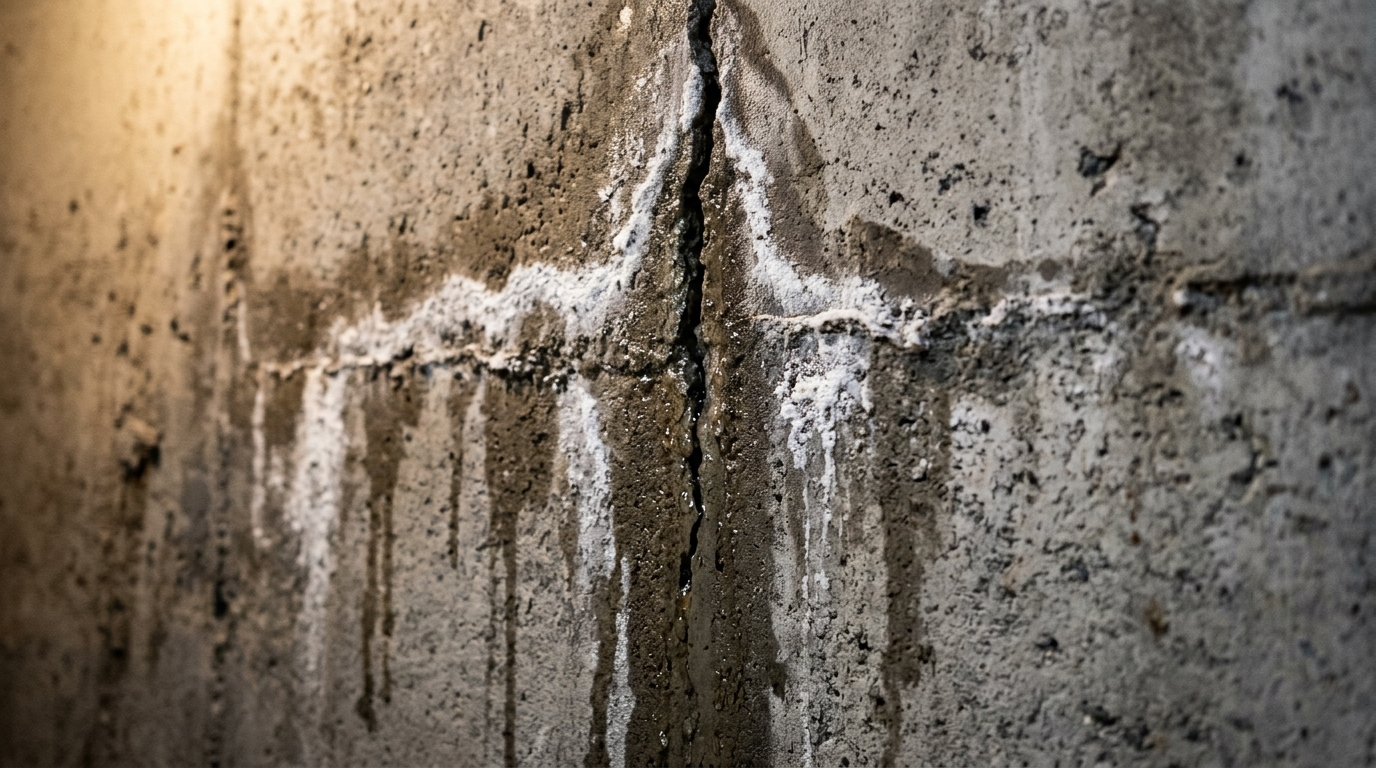
Geotechnical Soil Mechanics and Foundation Dynamics
To fully grasp the hazards posed by subterranean water discharge, one must examine the interaction between water and native soil mechanics. Modern foundation engineering relies on consistent, uniform soil density beneath every square foot of concrete footing. When pressurized plumbing lines rupture, this delicate geotechnical equilibrium is rapidly destroyed.
1. Hydro-Mechanical Soil Erosion and Subterranean Cavern Formation
Pressurized water escaping at 50 to 80 PSI acts as a continuous hydraulic cutting jet. As escaping water streams through compacted aggregate stone, sand bedding, and native clay or silt, it washes away fine mineral particles. Over weeks and months, this fluid erosion hollows out massive voids directly beneath the slab. Without continuous ground support, the concrete foundation is forced to act as a suspended span, subjecting the slab to intense tensile stresses it was never engineered to withstand.
2. Expansive Clay Swelling and Differential Upward Heaving
In regions dominated by expansive clay minerals (such as montmorillonite, bentonite, and illite), the introduction of thousands of gallons of subterranean water triggers dramatic volumetric expansion. Clay soil crystals absorb water molecules into their interlayer lattices, swelling by up to 25% to 40% in total volume. This expansion generates upward swelling pressures exceeding 7,000 to 10,000 pounds per square foot.
Because the water leak is typically concentrated near a specific manifold or pipe elbow, the soil swells unevenly. This phenomenon—known in structural engineering as differential heaving—thrusts one portion of the home upward while adjacent dry zones remain stationary. Homeowners observe stair-step masonry cracks, distorted doorframes, warped flooring, and severed roofline junctions.
3. Capillary Moisture Vapor Migration and Indoor Mold Proliferation
Concrete is inherently porous, containing millions of microscopic capillary canals. As sub-slab soil becomes completely saturated, liquid water and high-pressure moisture vapor are pulled upward through the concrete via capillary suction. When this moisture reaches finished living spaces, it dissolves flooring adhesives, buckles hardwood planks, and creates ideal microclimates for toxic mold spores (including Stachybotrys chartarum and Aspergillus) to colonize interior drywall cavities.
The Primary Catalysts of Sub-Foundation Plumbing Failures
Water leaks under concrete foundations are rarely instantaneous accidents; rather, they are the culmination of chemical, mechanical, and geotechnical forces operating over extended time horizons:
- Thermal Expansion Friction: Buried copper supply lines expand and contract every time domestic hot water is drawn. As the metal moves against coarse crushed stone or sharp aggregate, the outer pipe wall is gradually ground away until a high-velocity pinhole breach develops.
- Galvanic and Electrolytic Pitting: Stray electrical ground currents and chemical reactions between unprotected copper tubing and soil minerals (such as sulfates and chlorides) cause localized electrochemical pitting, perforating metallic pipe walls from the outside inward.
- Internal Hydraulic Cavitation: Excessive municipal water velocity (greater than 7 feet per second) combined with unreamed pipe fittings creates turbulent fluid eddies that scour away the internal protective patina inside copper pipes, leading to erosion-corrosion.
- Poor Pre-Pour Bedding Preparation: Careless plumbing installation prior to concrete pouring can leave soft copper lines resting directly on large sharp stones or kinked under heavy machinery, predisposing the metal to stress fatigue cracking.
Advanced Non-Destructive Diagnostic Science
Historically, locating a water leak beneath a slab required speculative demolition—drilling exploratory holes and jackhammering trenches through finished flooring in a hit-or-miss attempt to find wet gravel. In modern forensic plumbing, cutting-edge technicians deploy professional slab leak detection instrumentation to isolate the subterranean rupture within a 6-inch tolerance before initiating any structural incisions.
1. Micro-Acoustic Ground Geophones and Digital Spectrum Analyzers
Pressurized fluid escaping through a microscopic fissure into compacted gravel generates distinct acoustic frequencies spanning 400 Hz to 2,000 Hz. Highly sensitive piezoelectric geophones placed on concrete or tile flooring pick up these micro-vibrations, amplifying them while digital band-pass filters eliminate ambient household noise (HVAC motors, street traffic, and wind). The point of maximum sound decibel intensity pinpoints the exact rupture coordinates.
2. Radiometric Infrared Thermography
Thermal imaging cameras detect surface temperature variances as small as 0.04°C. When a hot water line breaches beneath a slab, thermal conduction warms the concrete directly above the rupture, creating a radiant thermal bloom that is instantly visible on infrared screens, mapping subterranean pipe runs through solid masonry.
3. Tracer Gas Telemetry
In deep commercial slabs or environments where ambient noise precludes acoustic detection, technicians inject a non-toxic mixture of 5% hydrogen and 95% nitrogen into the isolated plumbing circuit. The tiny hydrogen molecules escape through the pinhole, migrate rapidly upward through concrete capillaries, and are detected by sensitive electrochemical sniffers on the floor surface.
Comparison of Sub-Foundation Remediation Strategies
| Remediation Protocol | Structural Disruption | Average Cost | System Longevity | Ideal Engineering Context |
|---|---|---|---|---|
| Direct Surgical Spot Repair | Localized 18"x18" slab opening | $1,800 – $3,400 | 5 – 15 Years | Single isolated mechanical defect in young, healthy copper pipe. |
| Continuous Overhead Reroute | Zero slab demolition; minor drywall incisions | $2,500 – $6,200 | 50+ Years (PEX-a) | Aging copper systems with systemic pitting or recurring leaks. |
| Epoxy Barrier Relining | Zero structural or flooring disruption | $3,500 – $7,500 | 25 – 40 Years | Historic, marble, or irreplaceable high-value finished flooring. |
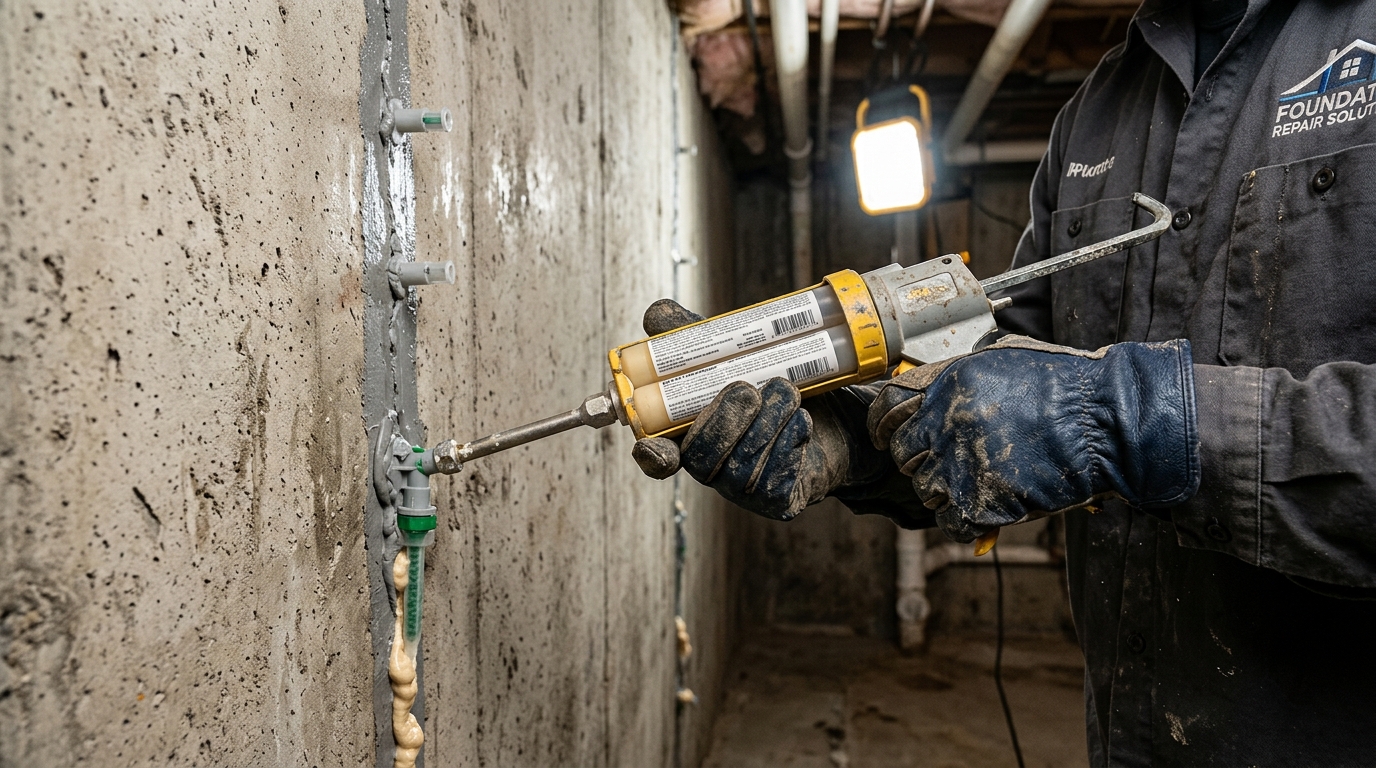
| Subgrade Void Grouting | Low-pressure polyurethane injection ports | $2,200 – $5,000 | Permanent | Post-leak stabilization where soil erosion created foundation voids. |
Insurance Coverage and Forensic Documentation
Property owners dealing with water leaks under a foundation must navigate complex homeowner insurance claim policies (HO-3 and HO-5). In most standard policies, the physical pipe repair itself (such as a $150 replacement copper coupling) is excluded as normal maintenance. However, the costly "tear-out and access"—including jackhammering through structural concrete, excavating gravel, restoring the slab, and repairing water-damaged flooring—is typically covered under sudden and accidental discharge provisions.
Ensure your diagnostic specialist provides a formal forensic leak report including acoustic decibel graphs, infrared thermography scans, line location maps, and itemized billing separating diagnostic locating, concrete tear-out, plumbing repair, and structural slab restoration.
Frequently Asked Questions: Water Leaks Under Foundation
Perform an isolation meter test: turn off all plumbing fixtures inside and outside the home. Inspect the water meter; if the low-flow dial or digital consumption indicator is moving, you have an active pressurized plumbing breach. If the meter remains completely stationary, water intrusion is likely due to hydrostatic groundwater seepage through foundation cold joints.
Yes. Prolonged pressurized water leakage washes away fine subgrade sands and saturates supporting soil. In non-cohesive soils, this creates structural voids that cause the foundation to sink or settle differentially. In expansive clay soils, it causes severe upward heaving that fractures foundation beams.
If your home is over 20 years old and has copper piping, an overhead reroute using cross-linked polyethylene (PEX-a) is overwhelmingly recommended. Fixing a single spot under an aging copper system increases hydrostatic pressure on neighboring weakened sections, frequently triggering a second leak elsewhere under the slab within months.
Yes. Shutting off the main water isolation valve when water is not actively required eliminates systemic pressure, halting subterranean discharge and significantly mitigating further soil erosion and foundation displacement until certified repair technicians arrive.